Peri-Urban Infrastructure Strategy for Victoria's Growing Communities
The Peri-Urban Infrastructure Strategy was developed to help Victorian councils understand the infrastructure investment required to support future population and housing growth. As population growth accelerated across Victoria's peri-urban regions, councils faced increasing pressure to provide the infrastructure needed to support new communities. Our team partnered with Value Advisory Partners and five Victorian peri-urban councils to develop a long-term infrastructure strategy that quantified future investment requirements and established a coordinated framework for sustainable growth
The Challenge
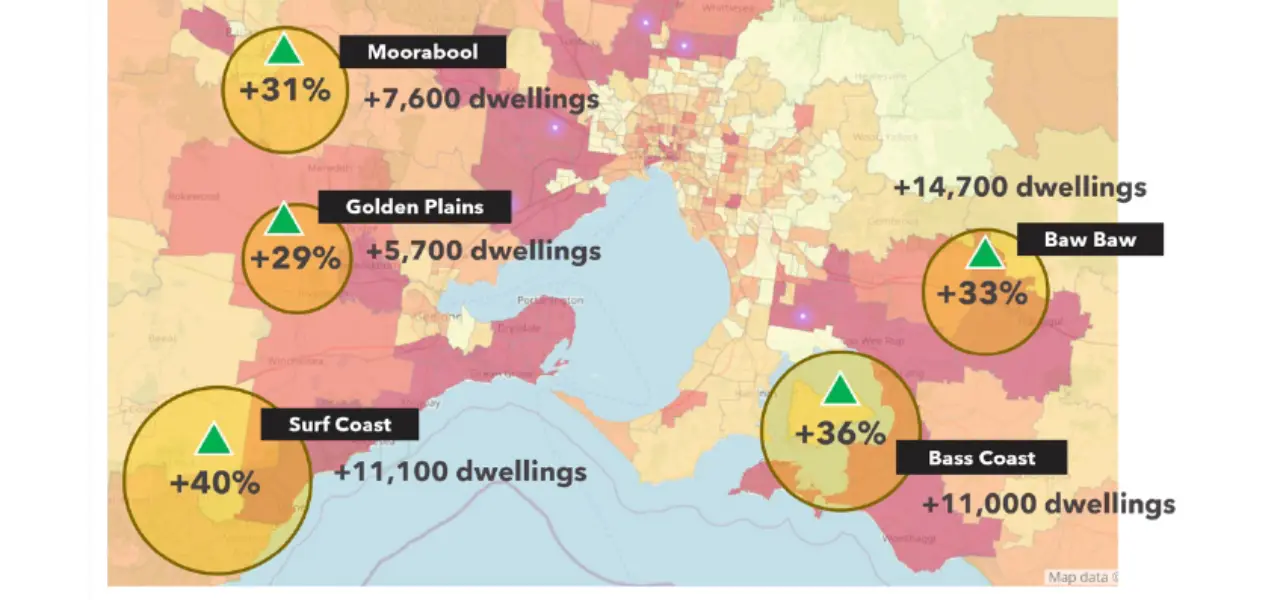
Bass Coast, Baw Baw, Golden Plains, Moorabool and Surf Coast Shires were experiencing strong population growth and increasing housing demand while managing the infrastructure needs of both existing and future communities. Despite growth across multiple municipalities, councils faced common challenges in demonstrating infrastructure requirements, prioritising investment, and securing funding for the roads, utilities, community facilities, and services needed to support future development.
The Solution
Working alongside Value Advisory Partners, we developed the Peri Urban Infrastructure Strategy, bringing together spatial analysis, growth forecasting and infrastructure planning to create a consistent evidence base across participating councils. The project established a new methodology for identifying infrastructure priorities, quantifying investment requirements and evaluating potential funding pathways. Through collaboration with council executives and key stakeholders, the strategy aligned regional priorities and provided a shared framework for future infrastructure planning and advocacy.
Outcomes
The strategy identified approximately 332 infrastructure projects with a combined value exceeding $1.25 billion, providing councils with a clear understanding of the investment required to support long-term growth. The framework demonstrated how infrastructure delivery could enable more than 72,000 future homes and accommodate an additional 162,000 residents across Victoria's peri-urban growth regions. The work continues to support coordinated engagement with government and provides a robust evidence base for future infrastructure investment and housing delivery.