

Regional DCP Toolkit and Infrastructure Funding Framework for Victorian Councils
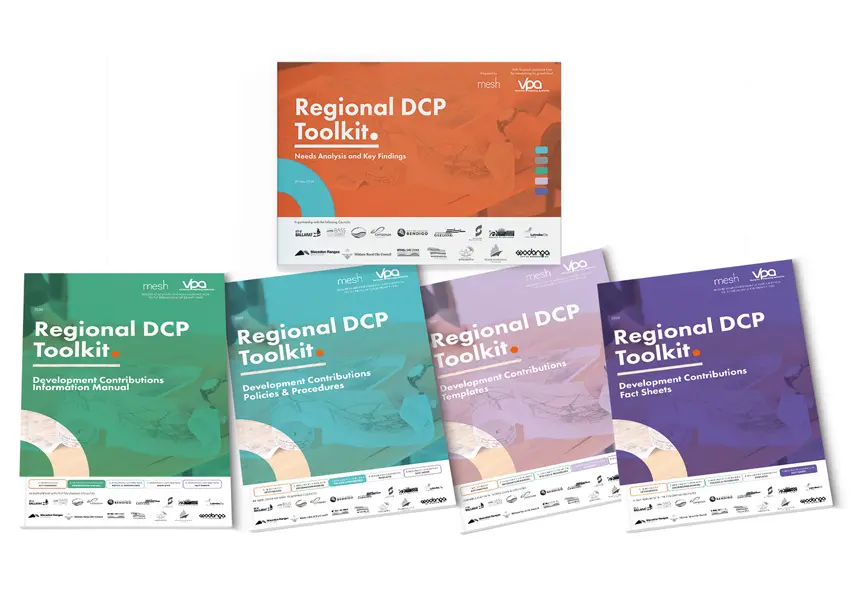
The City of Wodonga, in partnership with the Victorian Planning Authority (VPA) and a regional collaboration of Victorian councils, engaged our team to prepare the Regional Development Contributions Plan (DCP) Toolkit. The project was established to strengthen regional councils' capability to plan, implement, administer, and review Development Contributions Plans, recognising that many municipalities face similar challenges in funding and delivering growth-related infrastructure. Through detailed analysis of participating councils' development contexts, infrastructure funding approaches, and governance arrangements, we developed a practical toolkit to improve consistency, build organisational capability, and support more effective infrastructure planning across regional Victoria.
The Challenge
Regional councils operate in diverse growth environments, with varying levels of experience, resourcing and organisational maturity in relation to development contributions planning. While many councils rely on Development Contributions Plans to fund infrastructure required to support population growth, the participating councils faced common challenges around plan preparation, implementation, administration, reporting, review processes and long-term governance. Differences in internal procedures, financial management practices, and technical capability created uncertainty and reduced efficiency in delivering infrastructure funding programs.
The project also identified technology limitations and inconsistencies in the systems used to manage contribution plans, creating additional barriers to implementation and ongoing administration. Our team was tasked with establishing a practical framework that could be applied across multiple councils while recognising each municipality's unique circumstances.
The Solution
Our team undertook a detailed needs analysis across participating councils to understand current and future requirements for development contribution planning, implementation, administration, reporting, and review. Working closely with council representatives, the project examined development contexts, growth forecasts, infrastructure priorities, governance arrangements, project costing approaches and current funding mechanisms.
The outcome was a comprehensive Regional DCP Toolkit that provided practical guidance across all stages of the infrastructure funding process. The toolkit incorporated council-specific assessments, summaries of DCP projects, project cost estimates, growth profiles, infrastructure funding approaches, risk assessments and implementation recommendations. It also included best-practice guidance, templates and procedural resources designed to improve consistency and support councils regardless of their level of experience with development contributions planning.
Alongside the toolkit, Veris completed a software gaps analysis to assess the technological challenges facing regional councils. This work identified opportunities to improve data management, reporting, and administration processes, and provided recommendations to strengthen the long-term implementation of infrastructure funding frameworks.
Outcomes
The Regional DCP Toolkit created a shared foundation for infrastructure funding planning across participating regional councils. By establishing practical guidance, consistent methodologies, and implementation resources, the project improved councils' ability to prepare, administer, and manage Development Contributions Plans with greater confidence and consistency.
The toolkit gave councils clearer visibility of infrastructure funding risks, project priorities, and governance requirements, while supporting organisational capability building through practical tools and guidance materials. It also created a framework for ongoing regional collaboration, knowledge sharing and continuous improvement in infrastructure funding practices.
The project continues to provide a structured approach for regional councils seeking to strengthen infrastructure planning, improve implementation outcomes and support sustainable growth through more effective development contributions management.